I think it’s important that scientists explain to the general public what their research is about and the impact it can have on their daily lives. I’ve therefore produced a number of exhibitions on various aspects of my work.
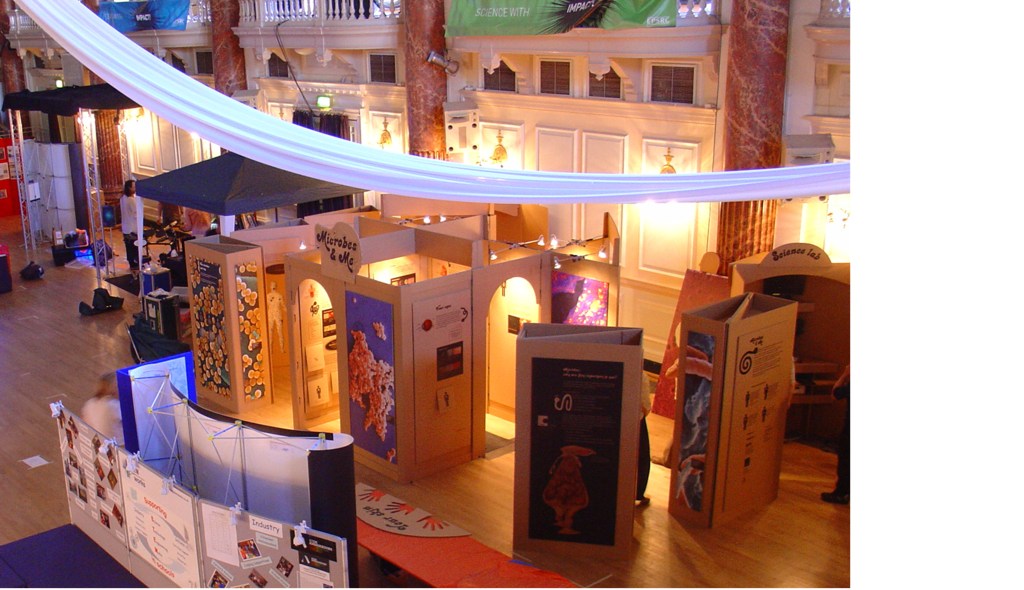
“Microbes and Me” exhibition at the Cheltenham Science Festival; 2009
One of my main research interests when I worked at University College London was the human microbiota i.e. the communities of microbes that live on us and, in general, do us a lot of good. This exhibition revealed which microbes live on the various regions of our body and what they are doing there.
Microbiota Row
I wrote a song called Microbiota Row which is meant to be sung to the tune of Bob Dylan’s song Desolation Row. It briefly describes the various microbes that are found on our body.
The eyes have a microbiota
That’s very sparse indeed
A few Gram-positive cocci
Scavenge from tears all that they need.
The skin has a denser population
P. acnes is plentifully found
While coryneforms and staphylococci
Are invariably around.
But molecular tools have shown us
There’s much more still to know
About the microbes that live upon us
And even help us grow.
The respiratory tract is moist and inviting
With food aplenty there
But of the mucociliary escalator
All microbes must beware.
Yet haemophili and streptococci
And Neisseria can survive
While Mollicutes and Moraxella
Will there be found alive.
But there are pathogens among them
Most deadly, that’s for sure
Armed with many deadly toxins
To bring us to death’s door.
Inside the terminal urethra
Staphylococci hold on tight
But most of the urinary tract is sterile
Thanks to innate immunity’s might.
A male’s reproductive system is arid
But with microbes a female’s abounds
With lactobacilli and other genera
Their variety astounds.
But hormones have a great effect
On which microbes there can grow
And their relative proportions
Change as time’s stream does flow.
From the mouth down to the rectum
The intestinal tract unwinds
Producing ecosystems so complex
And microbiotas of many kinds.
The oral cavity is aswarming
With 800 taxa there
While the hostile, acidic stomach
Apart from H. pylori is almost bare.
The small intestine is nearly sterile
But the colon is replete
With almost a thousand species
And without them we’re incomplete.
Yes, I know you think they’re nasty
Those minutest forms of life
Your mother said that they were dirty
And would only cause you strife.
But they’re essential for your survival
Believe me you really must
They digest our food and protect us from
Pathogens that would make us dust.
Most of our indigenous microbes
Play a beneficial role, so please
Don’t disturb or try to remove them
The result would be disease.
The Wellcome Window
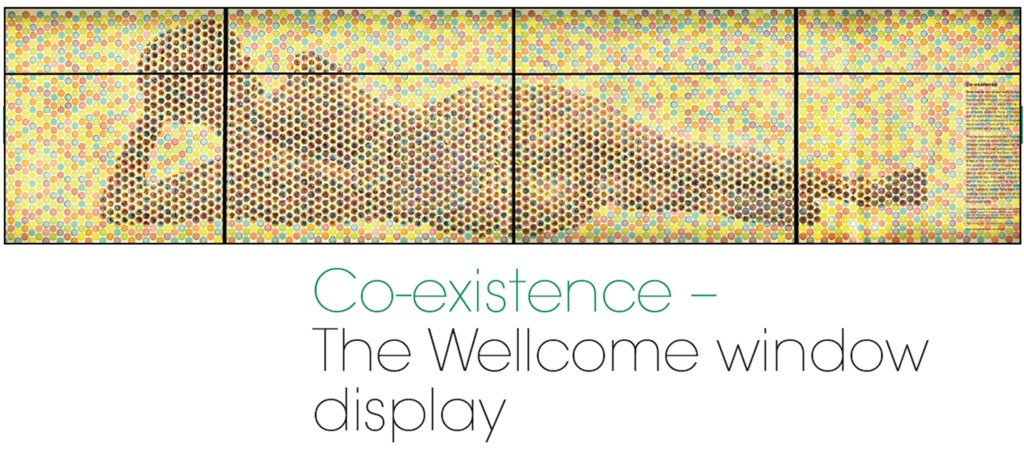
In September 2008 I was invited with a colleague (Dr Derren Ready) to collaborate with the artist Julia Lohmann to produce a display that would show the distribution of microbes on and in a healthy human.
We finally collected in excess of 750 digital images from 32 different microbial genera. More than 4,500 glass petri dishes were used to construct the huge figure. This was mounted in the window of the Wellcome Trust headquarters in London and looked stunning, especially at night.
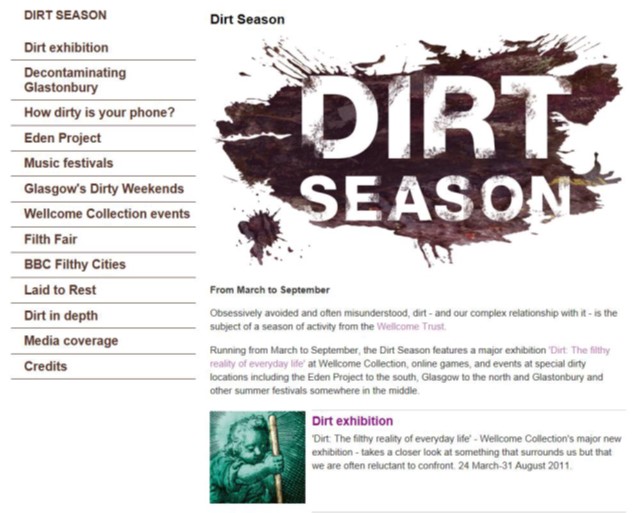
Dirt Season at the Wellcome Collection; 28th May 2011
This focussed on the microbes that live on and within our bodies and can be transferred to objects in the environment.
“Get Mouthy” at the Wellcome Collection; 30th September 2011
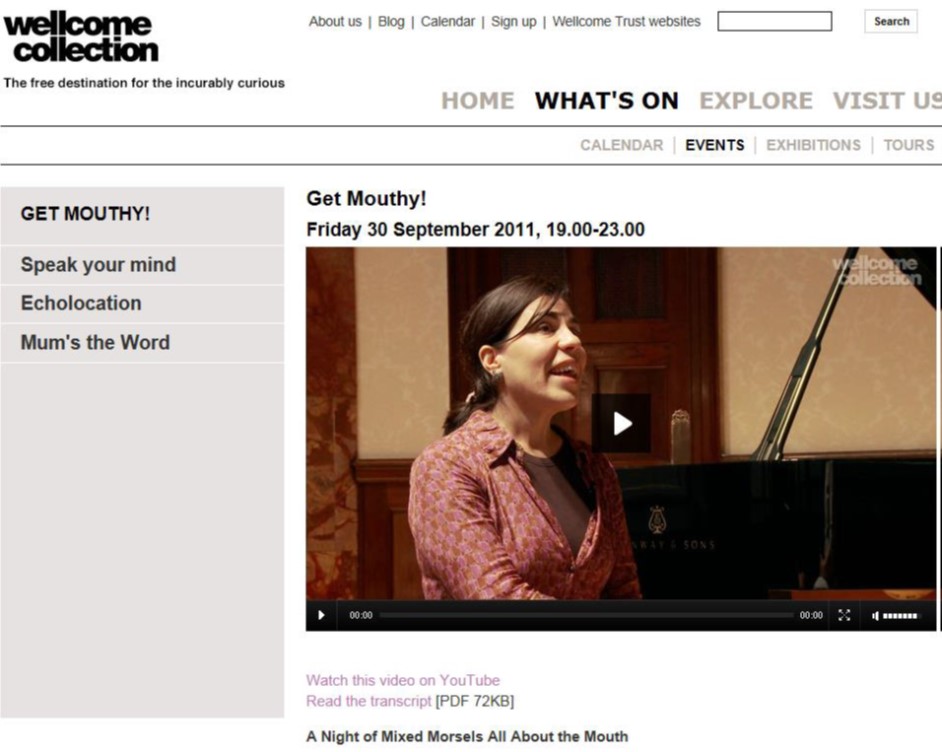
An exhibition that described the microbes present in the mouth and the diseases that they can cause
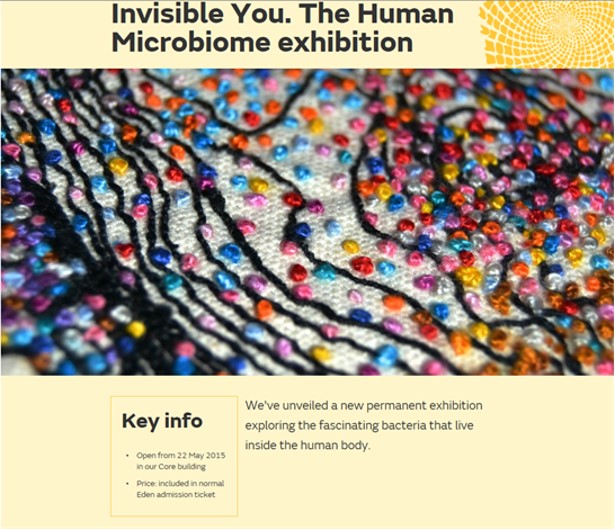
Invisible You: the human microbiome exhibition at the Eden Project
Since 2013, I have been the Senior Scientific Advisor to the Eden Project on their Human Microbiome exhibition which opened on 22nd May 2015
https://www.edenproject.com/visit/things-to-do/core-building/invisible-worlds-exhibition
“On light” at the Wellcome Collection; 1st – 4th May 2015
I provided an exhibition that described the uses of light-activated antimicrobial agents in contemporary medicine.
 Mike's Books