Life after Death: what happens to your body after you die?

Death is not an end – it’s a new beginning. After death, all of the molecules that came together to form the living “you” become nutrients for millions of creatures, large and small. Your body becomes the hub of a complex ecosystem of microbes, insects, worms, plants and more. Cheer up! This book shows how you are going to live forever – as components of so many other wonderful creatures. It describes the science behind the remarkable recycling of your body. We begin with lessons about how your body functions, is a collection of valuable nutrients and is a home to millions of microbes. The book goes on to describe the various stages the body passes through as it decomposes following death. The microbes and insects that make use of your tissues are then introduced. Finally, you will learn about the enduring effects that your body will have on the wider biosphere. We are rich in valuable resources that will end up feeding an immense number and variety of other creatures. Inevitably, your body will support the continuation of life on our beautiful planet – this book describes how all this happens.
CONTENTS
Chapter 1. It comes to us all
Chapter 2. A rich bag of goodies – the human body as a source of nutrients
Chapter 3. Our life-long microbial companions – who are they
Chapter 4. Not a pretty picture – our appearance after death
Chapter 5. The great betrayal – our own cells and our symbionts turn against us
Chapter 6. From the micro to the macro – now the big guys move in
Chapter 7. And what about the rest of the big, wide world? Corpse
decomposition and the environment
Close Encounters of the Microbial Kind: Everything You Need to Know About Common Infections
This is a book aimed at the general public. I wrote it with my daughter, Philippa, who is a doctor working in general practice in Brighton
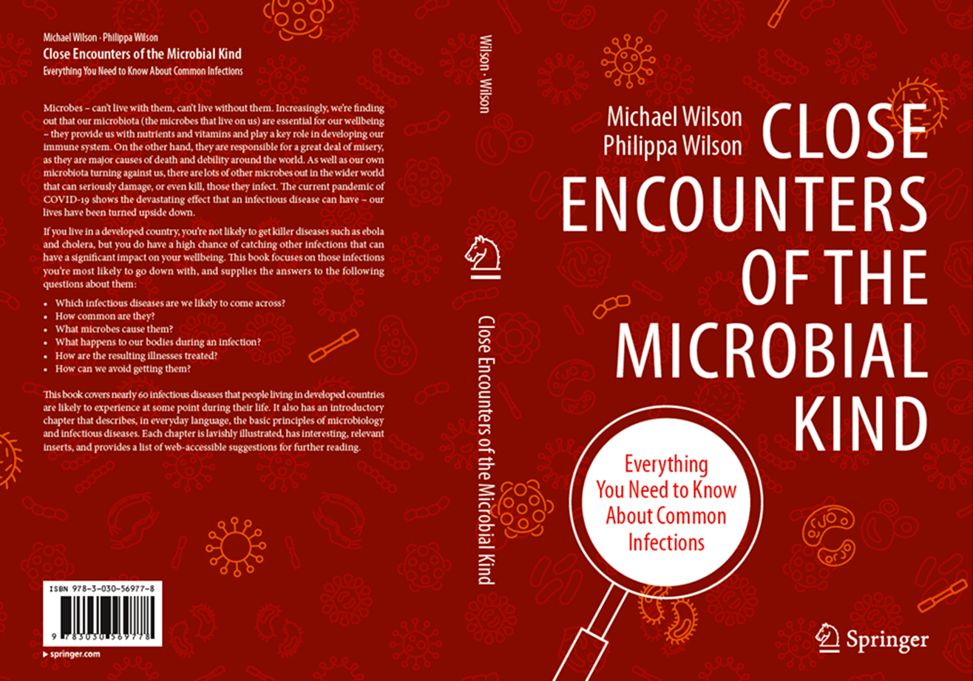
Microbes – can’t live with them, can’t live without them. Increasingly, we’re
finding out that our microbiota (the microbes that live on us) are essential for our wellbeing – they provide us with nutrients and vitamins and play a key role in developing our immune system. On the other hand, they are responsible for a great deal of misery, as they are major causes of death and debility around the world. As well as our own microbiota turning against us, there are lots of other microbes out in the wider world that can seriously damage, or even kill, those they infect. The current pandemic of COVID-19 shows the devastating effect that an infectious disease can have – our
lives have been turned upside down.
If you live in a developed country, you’re not likely to get killer diseases such as ebola and cholera, but you do have a high chance of catching other infections that can have a significant impact on your wellbeing. This book focuses on those infections you’re most likely to go down with, and supplies the answers to the following questions about them:
• Which infectious diseases are we likely to come across?
• How common are they?
• What microbes cause them?
• What happens to our bodies during an infection?
• How are the resulting illnesses treated?
• How can we avoid getting them?
This book covers nearly 60 infectious diseases that people living in developed countries are likely to experience at some point during their life. It also has an introductory chapter that describes, in everyday language, the basic principles of microbiology and infectious diseases. Each chapter is lavishly illustrated, has interesting, relevant inserts, and provides a list of web-accessible suggestions for further reading.
Contents
Part I: Introduction to Microbiology and Infectious Diseases
1.Microbes and infectious diseases
Part II: Skin Infections
2. Acne vulgaris
3. Skin abscesses (boils)
4. Dandruff
5. Fungal nail infections
6. Fungal infections of the skin
7. Chickenpox
8. Shingles
9. Common warts
Part III: Infections of the Respiratory System
10. The common cold
11. Influenza
12. Coronavirus Disease 2019 (COVID-19
13. Sore throat (pharyngitis)
14. Acute sinusitis
15. Chronic sinusitis
16. Middle ear infections (acute otitis media)
17. Otitis externa
18. Acute bronchitis
Part IV: Infections of the Eye
19. Conjunctivitis
Part V: Infections of the Oral Cavity
20. Tooth decay (caries)
21. Gum disease
22. Bad breath
23. Oral candidiasis (oral thrush)
24. Oral herpes
Part VI: Infections of the Genito-Urinary System
25. Cystitis (lower urinary tract infection)
26. Vaginitis
27. Chlamydia
28. Gonorrhoea
29. Genital herpes
30. Genital warts and human papilloma viruses
31. Syphilis
Part VII: Infections of the Gastrointestinal System
32. Gastroenteritis due to Campylobacter
33. Gastroenteritis due to Salmonella
34. Gastroenteritis due to Clostridium perfringens
35. Gastroenteritis due to Norovirus
36. Gastroenteritis due to Rotavirus
https://link.springer.com/book/10.1007/978-3-030-56978-5
Into the labyrinth: in search of Daidalos
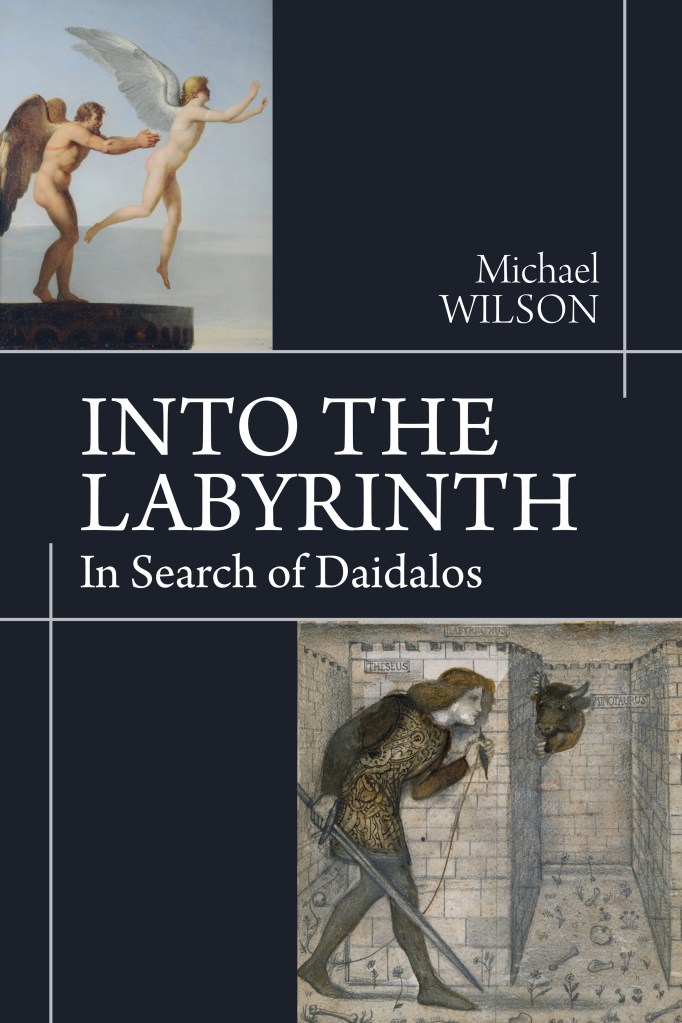
Daidalos (Daedalus) was one of the key figures in the Minoan civilization, the right-hand man of King Minos and a friend of Queen Pasiphae and her daughter, Ariadne.
He was a cousin of the Greek hero, Theseus, and Socrates boasted that he was a descendant of Daidalos.
He was renowned as an architect, inventor, sculptor, scientist and engineer.
It’s been suggested that it represents Daidalos.
Image courtesy of the Metropolitan Museum of Art, New York. CC0 1.0
CONTENTS
Chapter 1. Who was Daidalos?
Chapter 2. The Mediterranean world in the time of Daidalos
Chapter 3. Daidalos’ story
Chapter 4. The works of Daidalos
Chapter 5. The legacy of Daidalos
Content of the book
As well as telling the story of Daidalos, the book will also provide the reader with:
- a description of the world as it would have been during his lifetime. This includes the Minoan and Mycenaean civilisations as well as the Thapsos culture in Sicily
- an introduction to the important classical Greek and Roman writers
- an introduction to the main ancient books that describe the Mediterranean world in the 2nd millennium BCE
- a collection of photographs of ancient sites, pottery and other artefacts as well as works of art that deal with events in Daidalos’ life
- a catalogue of paintings, poems, stories, films and operas that are based on the life of Daidalos
Key features of the book
(a). uses an approach that combines history, mythology, literature, art, science and technology
(b). incorporates material from some of the most important ancient writers in Western culture
(c) provides references to all of the sources used
(d ). supplies a list of reading material to enable further exploration of the various topics covered
(e ). is lavishly illustrated and is the largest collection of images relating to the life of Daidalos that has ever been assembled
(f). uses inserts to provide the reader with additional information on characters, writers and historical incidents referred to in the main text
(g) as well as telling the story of Daidalos, the book describes what life would have been like for him in the various places he lived
(h) discusses the relevance of Daidalos to the present day
(i) as a practicing scientist I have expertise in a discipline other than the classics which has skilled me up for writing this new book in ways that have enabled me to come at the topic from intriguing angles.
Target Audience of the book
The main target audience is the adult, non-specialist reader who has an interest in any of the following – mythology, ancient history, sculpture, art, the Minoans, the Mycenaeans, ancient literature and classical writers.
The book would also be of interest to secondary school pupils with an interest in the classics and ancient civilisations as well as to undergraduates studying for degrees in these subjects. As it will be fully referenced it would be a useful starting point for further study of: (i) the bronze age cultures of the Mediterranean, (ii) ancient literature, (iii) Greek, Roman and Etruscan art and (iv) mythology.
The book would certainly appeal to students of art and art history as Daidalos is regarded as being the father of sculpture, responsible for innovative approaches to this art form, as well as being the ancestor of all artists. The large number of relevant images included in the book would be a valuable resource for such students.
A number of continuing education courses on ancient civilisations are run by several universities and the book would be of interest to them also.
Daidalos – the first of Europe’s mobile researchers? An article written for the European Institute at University College London
https://ucleuropeblog.com/2020/11/24/daidalos-the-first-of-europes-mobile-researchers/
The mythical genius of Daidalos, the first polymath. An article written for History Extra, the BBC history magazine
https://www.historyextra.com/period/ancient-greece/daidalos-daedalus-who-first-polymath-minotaur-labyrinth-icarus/
The Human Microbiota in Health and Disease: an ecological and community-based approach
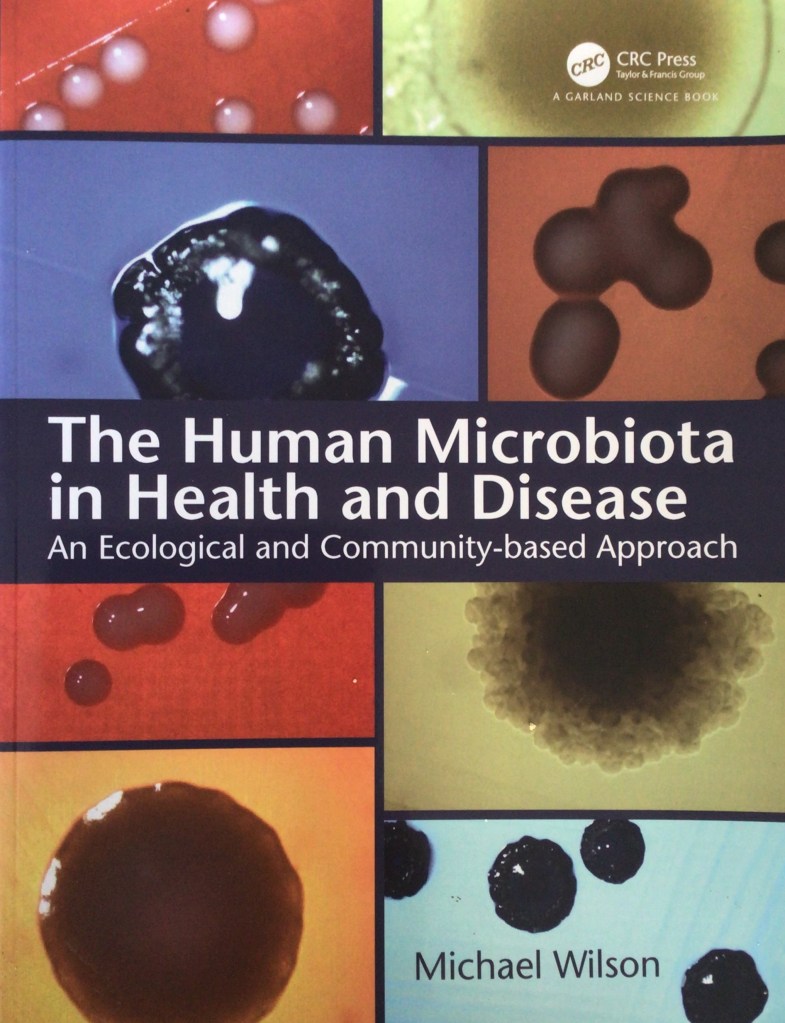
A human being consists of a mammalian component and a multiplicity of microbes, collectively referred to as the “microbiota” or “microbiome,” with which it has a symbiotic relationship. The microbiota is comprised of a variety of communities, the composition of each being dependent on the body site it inhabits. This community variation arises because the numerous locations on a human being provide very different environments, each of which favors the establishment of a distinct microbial community. Each community consists of bacteria, fungi and viruses with, in some cases, archaea and/or protozoa.
It is increasingly being recognized that the indigenous microbiota plays an important role in maintaining the health of its human host. However, changes in the overall composition of a microbial community at a body site, or an increase in the proportion of a particular species in that community, can result in disease or other adverse consequences for the host.
Chapter 1 The Human Microbiota—A Historical and Methodological overview
Chapter 2 The Human–Microbe Symbiosis
Chapter 3 The Indigenous Microbiota of the Skin
Chapter 4 The indigenous microbiota of the respiratory system
Chapter 5 The indigenous microbiota of the genitourinary system of males
Chapter 6 The Indigenous Microbiota of the Urinary System of Females
Chapter 7 The Indigenous Microbiota of the Reproductive System of Females
Chapter 8 The Indigenous Microbiota of The Oral Cavity
Chapter 9 The Indigenous Microbiota of the Gastrointestinal Tract
Chapter 10 Microbial Community Disruption—A Role in Other Human Diseases?
Chapter 11 The Indigenous Microbiota of Humans—Where Are We Now and Where Should We Be Going?
Feel that moon, sister, feel that moon
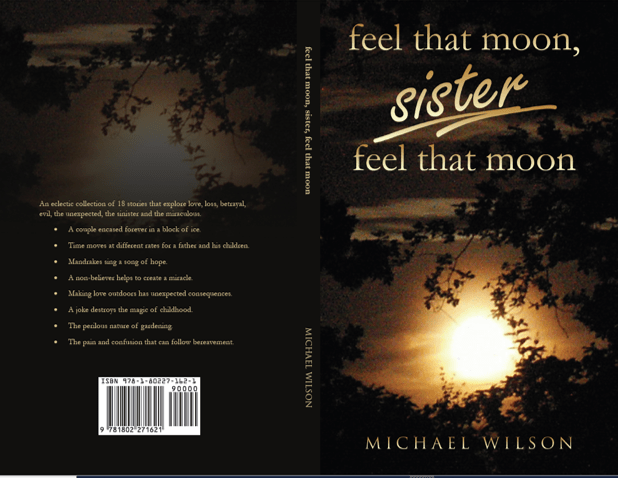
An eclectic collection of 18 stories that explore love, loss, betrayal, evil, the unexpected, the sinister and the miraculous.
- A couple encased forever in a block of ice.
- Time moves at different rates for a father and his children
- Mandrakes sing a song of hope
- A non-believer helps to create a miracle
- Making love outdoors has unexpected consequences
- A joke destroys the magic of childhood
- The perilous nature of gardening
- The pain and confusion that can follow bereavement
- Feel that moon, sister, feel that moon
- Love minus zero
- The last time I saw God
- I must go down to the sea again
- In a country strange my prince lies dreaming
- The sandman
- Spider woman
- An English Christmas dinner
- Car-free, care-free
- Happy birthday
- The hen house
- Jeepers, creepers
- Keep on running
- The miracle-maker
- Oh, how we danced
- The joke
- A long time waiting
- Flying south
Bacteriology of Humans; an ecological approach
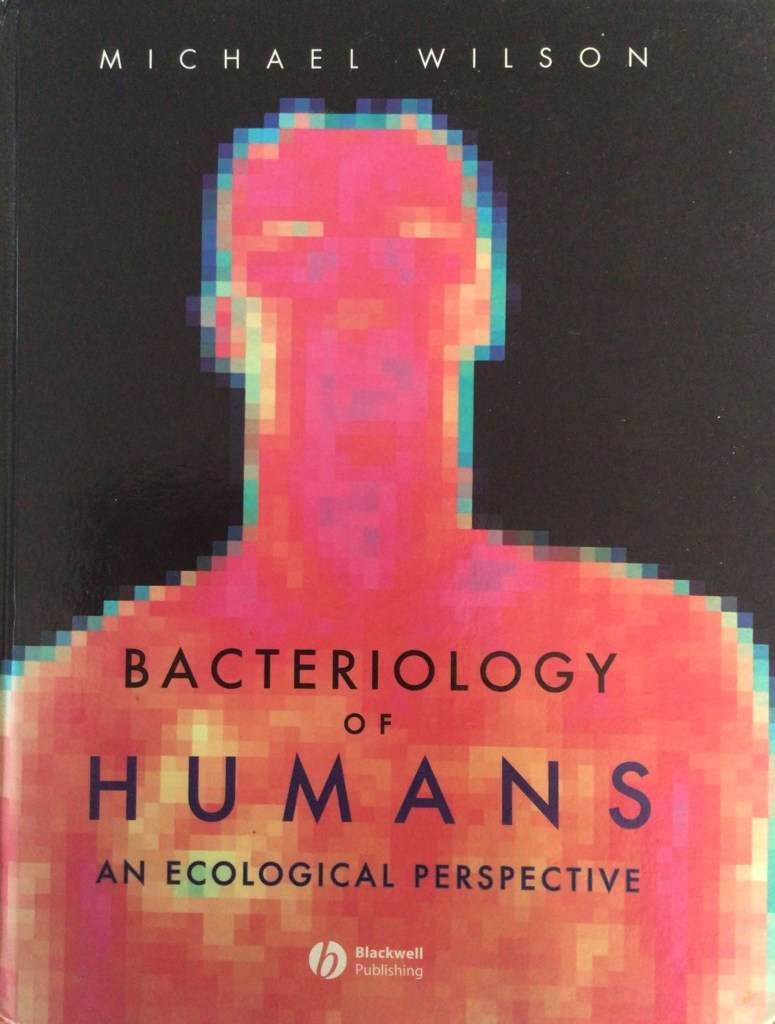
Until recently, the indigenous microbiota of humans has been a relatively neglected area of microbiology with most attention being focused on those microbes that cause disease in humans, rather than on those that co-exist with us in the disease-free state. However, in the past decade research has shown that not only is the indigenous microbiota involved in protecting humans from exogenous pathogens but it is also involved in our development and nutrition. Consequently, interest has grown substantially among health professionals and scientists in analyzing and understanding these microbial (largely bacterial) communities.
This comprehensive, yet accessible text provides an up-to-date guide to the development, composition and distribution of these microbial communities. With the aid of abundant colour figures, diagrams, tables and maps, it establishes links between the physicochemical factors prevailing at an anatomical site and the types of microbes to be found there. The book includes an introduction to the human-microbe symbiosis as well as an in-depth look at the main systems and organs of the human body that have an indigenous microbiota. Each chapter includes a list of references for further study.
This is an excellent and informative reference book that will be useful to anyone with an interest in microbiology, medical microbiology, microbial ecology, infectious diseases, immunology, human biology, medicine, dentistry, nursing, health sciences, biomedical sciences or pharmacy – it should be on the shelf of every major science and medical library.
CONTENTS
Chapter 1. The human–microbe symbiosis
Chapter 2. The indigenous microbiota of the skin
Chapter 3. The indigenous microbiota of the eye
Chapter 4. The indigenous microbiota of the respiratory tract
Chapter 5. The indigenous microbiota of the urinary system of females
Chapter 6. The indigenous microbiota of the reproductive system of females
Chapter 7. The indigenous microbiota of the urinary and reproductive systems of males
Chapter 8. The indigenous microbiota of the oral cavity
Chapter 9. The indigenous microbiota of the gastrointestinal tract
Chapter 10. The future
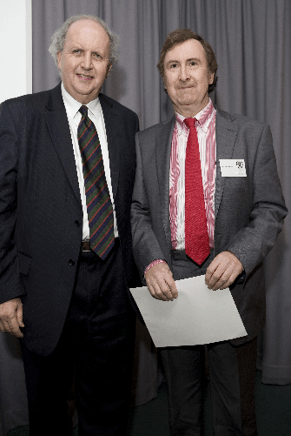
1st Prize, ‘New Authored Books’ category, Royal Society of Medicine and Society of Authors Medical Book Awards 2008. Presentation of prize by Alexander McCall Smith
Microbial Inhabitants of Humans: their ecology and role in health and disease
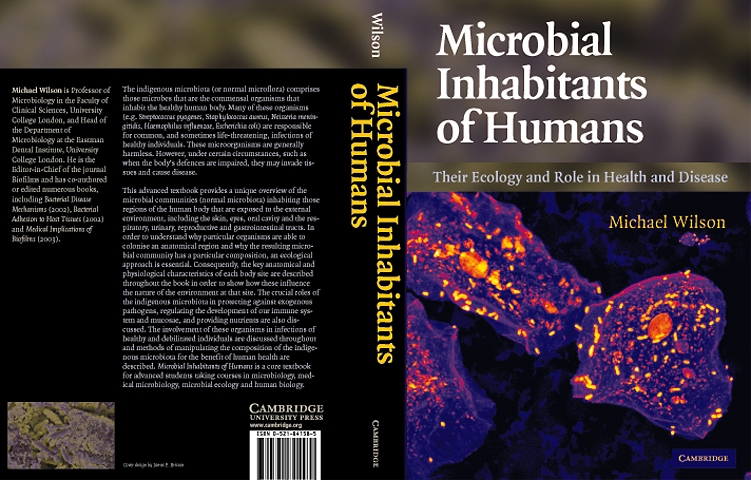
CONTENTS
Chapter 1. An introduction to the human-microbe symbiosis
Chapter 2. The skin and its indigenous microbiota
Chapter. 3. The eye and its indigenous microbiota
Chapter 4. The respiratory system and its indigenous microbiota
Chapter 5. The urinary system and its indigenous microbiota
Chapter 6. The reproductive system and its indigenous microbiota
Chapter 7. The gastrointestinal tract and its indigenous microbiota
Chapter 8. The oral cavity and its indigenous microbiota
Chapter 9. Role of the indigenous microbiota in maintaining human health
Chapter 10. Manipulation of the indigenous microbiota
Other books that I’ve edited or co-authored

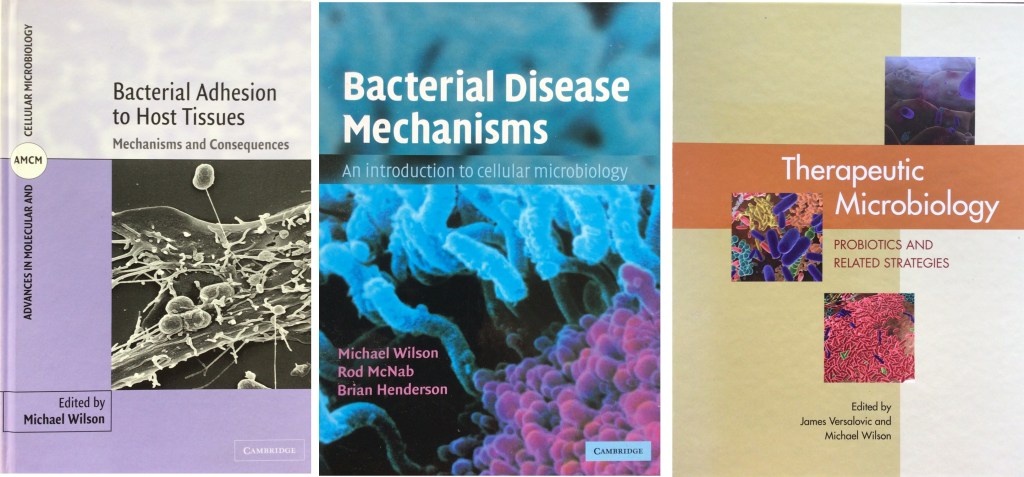
 Mike's Books